

Vario made CVT the European premium norm; Fendt still owns the narrative, and AGCO now owns the supply chain to scale it.
1) A quick origin story (and why this anniversary matters)
Fendt launched the first stepless CVT “Vario” at the 1995 Agritechnica with the Favorit 926, turning smooth, fuel-efficient speed control into a mainstream expectation in Europe. Thirty years on, Fendt has celebrated the milestone with its classic community and corporate comms, underscoring how Vario evolved from an engineering novelty to a brand identity pillar.
2) What Vario actually changed
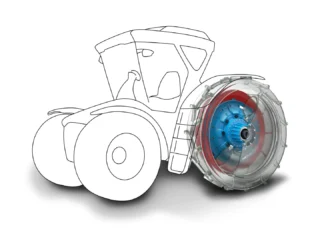
Vario removed fixed gear steps, letting the engine sit in its best efficiency zone while a planetary CVT varies travel speed seamlessly. The result: better drivability, fine speed control for PTO work, and often lower fuel use at transport or partial loads. Vario later merged with Fendt iD (low-engine-speed philosophy) and options like VarioGrip (integrated tire-pressure control), packaging transmission, engine mapping and tire contact into one efficiency story.
3) Proof of adoption: the 700 Vario as the reference
If one model family showcases Vario’s pull, it’s the 700 series. Fendt marked the 100,000th 700 Vario in 2024, an adoption milestone that mirrors how CVT became the “default” premium spec on many European mixed farms and contractors.
4) Diffusion inside AGCO: what was reused, what wasn’t
Within AGCO, Vario’s architecture seeded the broader AGCO CVT/AVT family used across Valtra (Q/S series) and Massey Ferguson (Dyna-VT on selected ranges). The branding differs (AGCO CVT/AVT, Dyna-VT, “Vario” kept exclusive to Fendt), but the strategic idea, stepless, low-rpm efficiency, propagates across the group. Not every MF/Valtra is CVT (powershifts remain big volume), yet AGCO has invested in CVT manufacturing capacity and test benches in Finland to scale supply.
Fendt keeps “Vario” as a brand signature, while AGCO deploys the underlying CVT competency group-wide where it fits portfolio and price points.
5) Has Vario stayed innovative? (yes, via system integration)
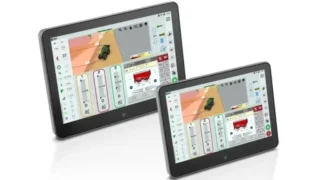
Recent launches show Vario tied to broader platform upgrades: 600 Vario with the new AGCO Power CORE50 engine and iD concept; 1100 Vario MT track layers pairing big-hp with CVT; and deeper integration with tire-pressure automation and headland systems. The competitive message is consistent: smooth, low-rpm, data-aware driveline.
6) User sentiment: the pros most often cited
- Driveability & PTO control: precise ground speed at constant PTO rpm, popular for mowing, baling, specialist work.
- Fuel efficiency in transport/partial loads: iD keeps revs low; CVT finds sweet spots automatically.
- Resale value & operator preference: “once CVT, hard to go back,” particularly in contractor fleets.
These themes recur in independent tests and farmer boards over many years.
7) User sentiment: the cons you still hear
- Acquisition cost: CVT lists higher than comparable powershifts; payback depends on duty cycle.
- Complexity/learning curve: more setup; best results need operators who understand modes and ranges.
- Service events can be costly: when issues occur (e.g., drivetrain/brake components that interact with the CVT), fixes require skilled dealers and aren’t cheap, though many reports trace failures to mis-use or heat/maintenance lapses.
8) Reliability and support
Long-running fleets suggest good durability when used correctly and maintained (oil, filters, cooling). Regions with strong Fendt dealer coverage also report predictable uptime, aided historically by structured warranty programs. Online forums still document isolated failures, as with any complex CVT, but patterns usually tie back to heavy braking via transmission, high-load abuse in wrong ranges, or poor maintenance. Net: reliable in capable hands, with dealer quality a big multiplier.
9) Competitive context in 2025
Every major OEM now fields a CVT/IVT competitor, but Vario’s brand equity remains distinctive in Europe, reinforced by continuous platform updates (700/900/1100 ranges) and the anniversary storytelling. The “CVT as default premium” norm that Fendt helped create has become a category expectation, and AGCO’s multi-brand CVT strategy keeps that know-how inside the group while Fendt retains the halo.
10) So what — industrially?
Thirty years in, Vario isn’t just a gearbox; it’s a strategic asset.
- For Fendt: proprietary naming and tight integration (iD, VarioGrip, automation) preserve a performance moat and justify premium positioning.
- For AGCO: the internalization of CVT know-how (AGCO CVT/AVT) lets Valtra and Massey Ferguson tap the competence selectively, broadening CVT scale while protecting Fendt’s identity.
- For customers: CVT is mature, proven, and best leveraged where operators value finesse, transport efficiency, and PTO precision. Powershifts still win on sticker price and in simple, heavy draft tasks, so duty cycle remains the deciding factor.
Bottom line
The 30-year Vario milestone is more than nostalgia: it marks how Fendt turned a transmission into a brand promise and how AGCO translated that into a group capability.