

For decades, the tractor has been the unquestioned center of value in agricultural machinery. Power, durability and engineering defined competitive advantage, and brand differentiation was largely embedded in the machine itself.
That model is now under structural pressure.
As production becomes globally distributed, components increasingly standardised, and agronomic value shifts toward implements, software and lifecycle services, the tractor is gradually evolving from a differentiated product into a standardised power platform within a broader agricultural system.
The key question is no longer who builds the best tractor.
It is where differentiation, and therefore margin, still resides.
1. From Differentiated Product to Standardised Platform
Historically, tractors were highly differentiated industrial products. Engine performance, transmission architecture, reliability and mechanical robustness created clear distinctions between manufacturers.
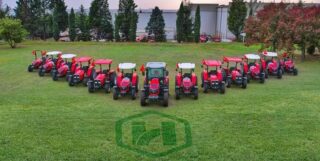
Today, many of these elements have converged. Global sourcing, shared suppliers and platform strategies have reduced visible performance gaps across brands, particularly in mid-range segments.
The tractor is increasingly defined not by unique engineering, but by its ability to integrate into a wider operational system.
2. The Convergence of Core Components
Key tractor subsystems, engines, transmissions, hydraulics and electronics, are increasingly sourced from a limited number of global suppliers or developed on shared architectures.
This convergence reduces technical differentiation at the product level. While performance differences still exist, they are often incremental rather than structural.
As a result, competitive advantage shifts away from component-level innovation toward system-level integration.
Table — Evolution of Differentiation in Tractors
| Layer | Past Differentiation | Current Trend |
|---|---|---|
| Engine | High | Converging |
| Transmission | High | Moderately converging |
| Hydraulics | Moderate | Standardising |
| Cab & comfort | Moderate | Converging |
| Digital systems | Low | Increasing |
| Ecosystem integration | Minimal | Strategic |
3. Multipolar Production and Price Pressure
The emergence of multiple production hubs (India, China, Turkey and others) has expanded global manufacturing capacity.
These regions are not only increasing volume but also improving quality and technological capability. As a result, tractors across different geographies are becoming more comparable in performance.
Multipolar production therefore introduces structural price pressure, particularly in segments where differentiation is already limited.
4. The Limits of Horsepower as a Differentiator
For decades, increasing horsepower was a primary path to differentiation.
However, productivity is no longer determined solely by tractor power. Agronomic performance increasingly depends on implements, precision technologies and system integration.
When power exceeds what can be effectively utilised in the field, additional horsepower provides diminishing economic value.
This weakens one of the historical pillars of tractor differentiation.
5. The Shift Toward System-Level Value
As product-level differentiation declines, value migrates toward the broader system in which the tractor operates.
This includes:
- implements and agronomic tools
- digital platforms and data systems
- financing structures
- service and lifecycle management
The tractor becomes one element within a larger value chain rather than its central component.
Table — Where Value Is Moving in Farm Machinery
| Value Layer | Historical Importance | Emerging Importance |
|---|---|---|
| Tractor hardware | Dominant | High but declining |
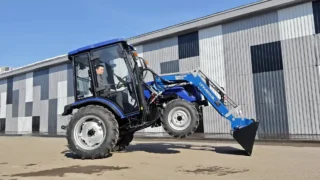
| Implements | Moderate | Increasing |
| Digital systems | Low | High |
| Finance & lifecycle | Moderate | Strategic |
| Data & platforms | Minimal | Strategic |
6. The Role of Implements in Differentiation
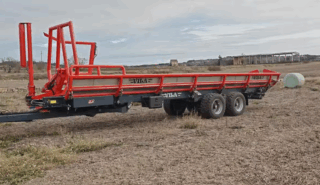
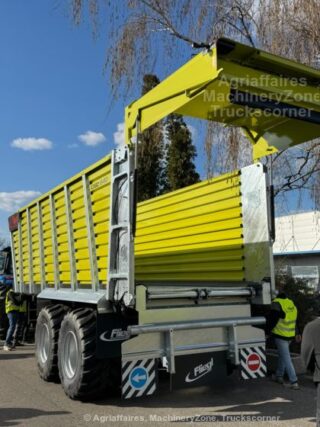
Implements increasingly define agronomic outcomes and therefore farm productivity.
Precision seeding, variable-rate application and soil management technologies are embedded within implements rather than tractors. This shifts differentiation toward the tools interacting directly with the field.
In several large-scale farming systems, the implement has become the most capital-intensive and technologically sophisticated component of the operation.
7. Digital Ecosystems as Competitive Moats
Digital platforms are emerging as key differentiators in the tractor industry.
Farm management systems, data analytics and machine connectivity create operational ecosystems that extend beyond individual machines.
Once integrated into a digital environment, switching costs increase significantly. The decision to purchase a tractor becomes part of a broader system choice rather than a standalone product evaluation.
8. Pricing Power and the Erosion of Product Margins
As tractors become more comparable in performance, pricing power at the product level weakens.
Manufacturers increasingly rely on:
- financing structures
- service contracts
- parts and retrofit
- software subscriptions
to sustain margins.
The economic model shifts from product margin to lifecycle margin.
Table — Product vs System-Based Margin Models
| Model | Margin Source | Stability |
|---|---|---|
| Product-driven | Machine sale | Volatile |
| Lifecycle-driven | Service & parts | Stable |
| Ecosystem-driven | Data & integration | High |
9. Segments Most Exposed to Commoditisation
Not all segments of the tractor market are equally exposed to commoditisation.
Lower and mid-range tractors, particularly in highly competitive global markets, are more vulnerable due to higher standardisation and price sensitivity.
High-horsepower and technologically advanced segments retain stronger differentiation, at least in the short term.
Table — Exposure to Commoditisation by Segment
| Segment | Commoditisation Risk |
|---|---|
| <70 HP | High |
| 70–150 HP | Moderate to high |
| 150–300 HP | Moderate |
| >300 HP | Lower |
10. Integration Is Becoming a Capital Allocation Decision
In a commoditising product environment, integration is no longer only a technological choice.
It is increasingly a capital allocation decision.
Over the past few years, leading manufacturers have accelerated integration through acquisitions and partnerships.
The acquisition of Raven by CNH Industrial, the creation of the PTx Trimble joint venture by AGCO, and connectivity agreements such as those between John Deere — and more recently CNH — with satellite providers like Starlink all point in the same direction:
control of the system is being actively built.
Two Diverging Strategic Paths
Table — Integration Strategies in the Tractor Industry
| Strategy | Approach | Structural Advantage | Structural Constraint |
|---|---|---|---|
| Acquisition-driven integration | M&A of technology platforms | Full ecosystem control | High capital intensity |
| Partnership-driven integration | Alliances with external players | Faster deployment | Partial control |
Manufacturers with strong financial capacity are pursuing acquisition-led strategies, internalising key technologies and building proprietary ecosystems.
Others, constrained by capital or scale, rely on partnerships to access digital, connectivity and precision agriculture capabilities.
This creates a structural divide:
- ownership vs access
- control vs participation
- integration vs interoperability
Who Is Building vs Who Is Partnering
Table — Strategic Positioning in Ecosystem Integration
| Strategic Position | Approach | Implication |
|---|---|---|
| Ecosystem builders | Acquire and integrate capabilities | High control, high capital intensity |
| Hybrid players | Mix of acquisitions and partnerships | Balanced risk and control |
| Ecosystem participants | Rely primarily on partnerships | Lower control, faster access |
Integration is therefore becoming both an offensive and defensive strategy.
It defines not only how value is created, but also who is able to retain it over time.
11. Why Agriculture Will Not Fully Follow Other Industries
While elements of commoditisation are visible in the tractor industry, agriculture is unlikely to follow exactly the same trajectory observed in sectors such as automotive or aviation.
In those industries, the separation between hardware and value layer has become almost complete.
Agriculture remains structurally different.
The interaction between machine and environment — soil variability, crop biology and weather — imposes constraints that cannot be fully abstracted through software.
The tractor may become more standardised.
The farming system will not.
12. Commodity Does Not Mean Irrelevant
The commoditisation of tractors does not imply that they are becoming unimportant.
Tractors remain essential as energy platforms. However, their role changes: from primary source of differentiation to foundational component within a broader system.
This is a shift in economic function rather than physical relevance.
13. How the Farmer’s Decision Is Changing
As tractors become more standardised, the purchase decision is shifting from product evaluation to system selection.
Farmers are increasingly choosing:
- compatibility with existing implements
- integration with digital platforms
- access to service and support
- financing conditions
rather than purely mechanical characteristics.
This changes the nature of competition.
The question is no longer:
Which tractor is better?
It becomes:
Which system works best within my farm?
In this context, the tractor becomes the entry point — not the decision itself.
14. A New Competitive Logic of the Tractor Market
The future tractor industry will likely be defined by a dual structure:
- standardised machines competing on cost
- integrated ecosystems competing on value
The competitive frontier will not be defined by horsepower alone, but by system orchestration.
Bottom Line
The tractor is not disappearing as a source of value.
But it is losing its position as the primary one.
As production globalises and technology converges, tractors are becoming standardised power platforms within broader agricultural ecosystems.
Differentiation is moving toward:
- implements
- digital systems
- lifecycle services
- integration
The future of the tractor industry will not be determined by who builds the best machines.
It will be determined by who controls the system in which those machines operate.