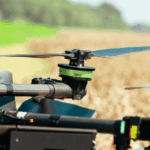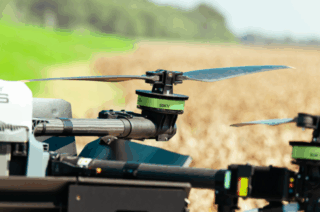

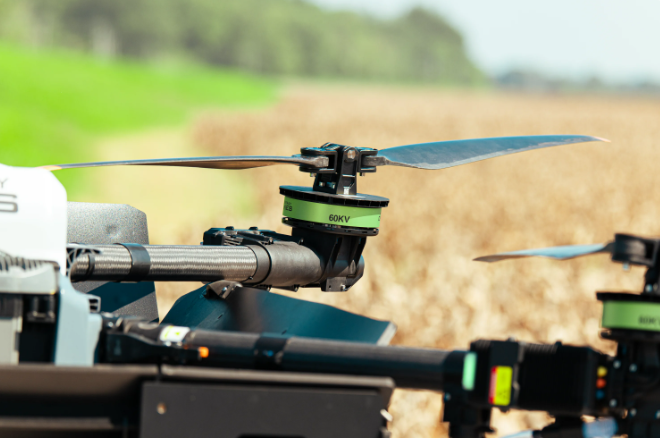
Agri Spray Drones (ASD) has introduced the AGRI 225, an agricultural spraying drone designed to combine higher application performance with improved serviceability and a more integrated software environment. The aircraft features a 22-gallon spray tank, equivalent to approximately 83 litres, and a dual-pump application system with a manufacturer-stated maximum flow rate of 60 litres per minute. Standard equipment includes four spray nozzles, while a two-nozzle configuration is also supported. Adjustable droplet sizes and revised spray components are intended to provide greater flexibility across agricultural treatment applications.
The new model incorporates larger spray-system plumbing, quick-release nozzle mounts, revised atomisation components and an electromagnetic flowmeter. Battery connections, locking mechanisms and power management have also been updated. Beyond these hardware improvements, ASD is expanding its software capabilities through an integrated environment for mission planning, fleet management and dealer diagnostics. The company plans to use US-based cloud infrastructure and tools that enable technicians to examine flight information and support operators remotely.
The AGRI 225 is based on the EAVision J150 platform and is currently manufactured in China, with ASD-directed modifications and quality-control operations in the United States. This distinction is important because the launch also marks a broader industrial transition: ASD intends to assume greater responsibility for product engineering, software development and, eventually, domestic assembly and manufacturing. The aircraft remains subject to the US regulatory process, while commercial orders, final pricing and availability have yet to be confirmed.
Bottom Line: The AGRI 225 is significant not only for its updated spraying capabilities but also for ASD’s effort to move beyond equipment distribution toward greater technological and industrial control. Its commercial impact will depend on regulatory clearance, service performance and the company’s ability to translate its development ambitions into a scalable operating model.