

Europe’s agricultural machinery manufacturers continue to demonstrate considerable technological capabilities. Yet EIMA and EuroTier 2026 also exposed an increasingly demanding competitive environment, where industrial efficiency, specialized expertise and the ability to commercialize innovation may matter more than technological sophistication alone.
Introduction – Europe’s Next Competitive Test
Ahead of EIMA 2026, AGINSIGHTS examined the future of European agricultural machinery against a changing global competitive landscape. Developments at the Farm Progress Show in the United States and CIAME in China raised important questions about the growing industrial ambitions of Asian manufacturers, Europe’s technological strengths and the potentially different competitive trajectories of tractors and implements.
EIMA in Bologna and EuroTier in Hanover now provide an opportunity to revisit those questions. The two exhibitions confirmed that European agricultural machinery remains technologically dynamic, with substantial engineering capabilities across tractors, specialized implements, precision farming and livestock equipment. However, the market assessments presented during the events revealed a more difficult commercial environment, characterized by weaker machinery demand, constrained agricultural investment and increasing pressure on distribution networks.
The central conclusion is that Europe’s agricultural machinery industry is not primarily facing an innovation deficit. Its emerging challenge is to convert technological capabilities into sustainable competitive advantage under increasingly demanding economic conditions. The implications differ significantly across industry segments.
1. Record Exhibitions, Weak Markets: The Industry’s Central Paradox
EIMA 2026 recorded approximately 370,000 attendances, 7% above the previous edition, with 1,800 exhibiting companies and visitors representing 150 countries. EuroTier attracted approximately 118,000 professional visitors from 155 countries and 2,108 exhibitors. Both events demonstrated the international relevance of European agricultural technology exhibitions. Yet strong participation did not coincide with an equally positive machinery market.
FederUnacoma’s assessments presented around EIMA highlighted declining tractor demand across several major markets during 2026.
| Market | Tractor sales trend | Reference period |
|---|---|---|
| United States | −13.0% | January–September 2026 |
| Canada | More than −9% | FederUnacoma reporting period |
| Brazil | −19.0% | January–July 2026 |
| Germany | −6.0% | January–September 2026 |
| France | −3.3% | January–September 2026 |
| Spain | −4.6% | January–September 2026 |
| Poland | −18.8% | January–September 2026 |
| United Kingdom | +17.4% | January–September 2026 |
| Italy | −5.4% | January–October 2026 |
Source: FederUnacoma market assessments, November 2026. National reporting periods differ and the figures should not be interpreted as a harmonized global dataset.
Italy illustrates the contrast particularly well. Despite EIMA’s record participation, domestic tractor registrations declined by 5.4% during the first ten months of 2026, reaching 13,592 units. FederUnacoma also projected a 4.3% decline in the overall value of Italy’s agricultural machinery and related equipment industry in 2026, to approximately €13.7 billion, including components and gardening machinery. These developments reflect a fundamental distinction between interest in technology and the financial capacity to purchase it.
Farmers may recognize the operational benefits of modern equipment while postponing replacement decisions because of agricultural income pressures, financing costs or uncertainty about future profitability. For manufacturers, this creates a difficult industrial equation: technological development requires sustained investment, but weaker demand makes it harder to recover those costs through equipment sales.
The commercial success of the next machinery generation will depend not simply on what manufacturers can develop, but on what farmers can economically justify purchasing.
2. European Tractors: Innovation Is No Longer Enough
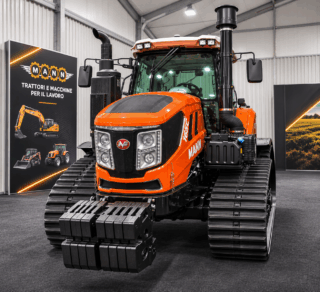
EIMA 2026 demonstrated that established European tractor manufacturers continue investing in platform development, transmissions, electronic integration and operator environments. Developments such as the CLAAS ARION 4 CMATIC, updated New Holland T7 ranges, the New Holland T2S family and the STEYR Spezial F CVT illustrated the continuing evolution of European tractor engineering.
These improvements should not be dismissed as incremental. Reliability, transmission efficiency, fuel consumption, operator productivity and application versatility can deliver meaningful economic benefits over a tractor’s working life. However, technological progress does not automatically translate into stronger competitive positioning.
European tractor manufacturers face a market in which international competitors, particularly from Asia, are developing increasingly sophisticated products while benefiting in some segments from substantial domestic manufacturing volumes and different cost structures. EIMA did not establish a decisive shift in global competitive leadership. Nevertheless, it reinforced the importance of distinguishing technological differentiation from commercial competitiveness.
This distinction becomes particularly relevant across different tractor categories. Premium high-horsepower tractors, specialized machines, compact tractors and standardized utility models operate under different competitive conditions. In premium segments, advanced engineering, integrated technology and established service networks may support substantial differentiation. In more standardized categories, acquisition cost, manufacturing efficiency and product simplicity can become increasingly influential.
The strategic risk for European tractor manufacturers is not necessarily technological inferiority. It is that growing product complexity may become harder to monetize in market segments where customers place greater emphasis on affordability and operating economics. For European OEMs, the challenge is therefore twofold: preserve technological leadership where customers reward it, while developing more cost-competitive industrial and product strategies where engineering sophistication alone provides insufficient differentiation.
3. Implements: Europe’s Potential Competitive Stronghold
The European implement industry presents a different competitive structure. Unlike tractor manufacturing, which requires substantial investment in complete vehicle platforms and high-volume industrial systems, implement production encompasses numerous specialized agricultural applications.
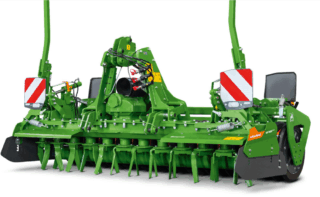
Soil preparation, seeding, fertilization, crop protection, forage harvesting and residue management involve distinct agronomic requirements and operating conditions. This diversity has historically supported a broad ecosystem of European manufacturers with deep application-specific expertise. EIMA 2026 reinforced the strength of this industrial specialization.
New equipment configurations, improved mechanical performance, electronically controlled adjustments, sensor integration and precision application technologies demonstrated how innovation can emerge from detailed knowledge of agricultural processes rather than entirely new machine architectures. This distinction may become strategically important as international competition intensifies.
| Competitive dimension | Tractors | Implements |
|---|---|---|
| Industrial structure | Complete vehicle platforms | Diverse application-specific equipment |
| Manufacturing scale | Often a major competitive factor | Varies considerably by application |
| Principal differentiation | Vehicle engineering, powertrain, electronics and service | Agronomic performance, specialization and application expertise |
| Digital integration | Guidance, vehicle control and powertrain management | Application control, precision and tractor compatibility |
| Main strategic challenge | Recovering platform investment at competitive volumes | Preserving specialization while managing growing technological complexity |
European implement manufacturers may possess defensible advantages where agronomic expertise, operating performance and customer-specific requirements are difficult to replicate through manufacturing scale alone. However, specialization does not guarantee competitiveness.
The increasing integration of electronics, software, sensors and connected systems raises development costs, while international expansion requires stronger distribution and service capabilities. Smaller manufacturers may find it increasingly difficult to finance all these requirements independently. This could encourage greater cooperation with technology suppliers, selective industrial partnerships and consolidation in particular market segments.
AGINSIGHTS’ strategic hypothesis is that European implements may prove more resilient than standardized tractor categories against certain forms of international competition, provided manufacturers preserve their agronomic specialization while improving industrial efficiency. The opportunity is substantial, but its realization will depend on execution rather than engineering heritage alone.
4. Precision Farming, Autonomy and Livestock Technology: Different Paths to Economic Value
EIMA and EuroTier demonstrated the growing technological diversity of agricultural machinery. Precision agriculture increasingly combines positioning, sensors, electronic controls and operational data. Autonomous solutions range from assistance systems integrated into conventional equipment to dedicated robotic platforms, while alternative propulsion technologies continue to develop around different operating requirements. No single technological pathway emerged as universally applicable.
Battery-electric equipment may offer advantages in compact machines, repetitive operations or environments with predictable energy requirements. High-power field applications face different constraints related to operating duration, energy density and infrastructure. Similarly, autonomous systems may create significant value where labour availability is limited or operations are highly repetitive, but their economic attractiveness depends on utilization, supervision requirements and total operating costs.
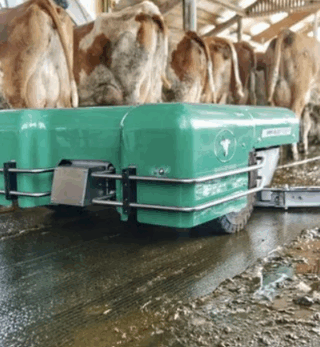
EuroTier added an important dimension to this assessment. Its emphasis on intelligent livestock production extended beyond robotics to feeding efficiency, animal health, welfare, housing, biosecurity, emission reduction and integrated farm management. Livestock technology operates within production systems where biological performance, feed costs, labour requirements and environmental conditions are closely connected. Improvements in monitoring, feeding precision or animal management can generate economic value through better production outcomes, not simply reduced labour.
This creates opportunities for manufacturers capable of integrating machinery, sensors, software and specialized production knowledge. It also reinforces the importance of evaluating technologies according to the operational problems they solve.
For OEMs, the challenge is increasingly one of capital allocation. Maintaining multiple technological development programmes requires substantial resources, and not every emerging solution will achieve sufficient commercial adoption to justify proprietary investment.
The next technological cycle is likely to reward manufacturers that select applications carefully, demonstrate measurable customer benefits and distinguish between technologies they should develop internally and capabilities better obtained through partnerships.
5. The Dealer Network: Europe’s Overlooked Competitive Vulnerability
One of the most consequential signals surrounding EIMA came not from a new machine, but from the European distribution sector. CLIMMAR’s 2026 assessments indicated deteriorating commercial conditions and weaker manufacturer–dealer relationships.
The Dealer Satisfaction Index declined to an average of 12.5, with nine of the ten assessed brands recording lower scores. The broader CLIMMAR Index fell to −0.89, its lowest recorded level. The association also reported disappointing new machinery sales, limited conversion of anticipated orders into purchases and stagnation in used equipment activity. Weakness in parts and workshop business added pressure to dealership economics.
These findings have implications extending beyond the current market downturn. Modern agricultural equipment increasingly depends on diagnostic capabilities, software support, technical training, specialized maintenance and customer assistance. Consequently, technological sophistication raises the importance of distribution networks at precisely the moment when some dealers are experiencing financial and commercial difficulties.
This creates a potential structural vulnerability for European OEMs. Manufacturers may invest heavily in advanced machinery, but the commercial value of those innovations depends on the ability of dealers to explain, sell, finance, deliver and support them. Dealer profitability, inventory exposure, technical capabilities and the allocation of commercial risk therefore become important elements of manufacturer competitiveness.
The implications are particularly relevant for smaller OEMs and specialized implement producers seeking international growth.
A technologically advanced manufacturer with a financially fragile distribution network may struggle to convert product differentiation into sustainable market performance. For European agricultural machinery manufacturers, strengthening dealer economics should therefore be treated as an industrial priority, not merely a commercial support function.
6. What EIMA and EuroTier Confirmed…and What They Did Not
The pre-EIMA AGINSIGHTS analysis identified several possible developments affecting Europe’s competitive position. The exhibitions provide useful evidence for reassessing those hypotheses, although trade fairs cannot independently establish changes in market leadership, profitability or customer adoption.
| Pre-EIMA strategic hypothesis | Evidence from EIMA & EuroTier | AGINSIGHTS assessment |
|---|---|---|
| Global competition is becoming more multipolar | Broad international participation and divergent regional market conditions | The direction remains credible; changes in leadership are not established |
| European tractors face growing competitive pressure | Continued engineering progress alongside increasingly demanding market economics | Technological strength remains evident, but cost competitiveness deserves greater attention |
| Implements may follow a different competitive trajectory | Extensive application-specific innovation and specialized engineering | European specialization represents a potentially defensible advantage |
| Precision farming and autonomy will become more important | Continued development across multiple machinery applications | Progress is clear; adoption depends on operational economics |
| Alternative propulsion will reshape equipment development | Multiple technologies addressing different requirements | No universal solution has emerged |
| European machinery demand is approaching recovery | Weak sales indicators despite strong exhibition participation | A broad recovery remains unconfirmed |
| Distribution networks will become increasingly strategic | Deteriorating CLIMMAR indicators | Dealer economics represent a significant competitive concern |
The exhibitions did not fundamentally overturn the original AGINSIGHTS assessment. They did, however, sharpen its industrial implications. European manufacturers continue to demonstrate technological strengths, but their future competitive position cannot be inferred from product announcements alone. Manufacturing costs, market segmentation, distribution capabilities and customer investment economics will increasingly determine which innovations succeed commercially.
Most importantly, the exhibitions reinforced the argument that European agricultural machinery should not be treated as a single homogeneous industry. Tractors, implements and livestock technologies operate under different industrial structures and competitive conditions.
Their future competitive trajectories may therefore diverge significantly, even within the same European agricultural economy.
7. European Farm Machinery 2027–2030: Where Competitive Advantage Will Be Won or Lost
The combined evidence from EIMA and EuroTier suggests that European agricultural machinery manufacturers are entering a period in which technological differentiation will remain necessary but become increasingly insufficient on its own. Three strategic developments deserve particular attention.
A more selective competitive landscape
European manufacturers will need to distinguish between market segments where advanced engineering commands a sustainable premium and those where production efficiency, affordability and product simplicity carry greater competitive weight. This distinction is particularly important in tractors, where growing international competition could intensify pressure on standardized categories.
For implement manufacturers, specialized agronomic knowledge may provide stronger differentiation, but increasing technological complexity could favour companies capable of combining application expertise with sufficient industrial scale. The result may be a more differentiated European industry, with distinct competitive strategies rather than a single model of technological leadership.
Innovation will face a stricter economic test
The commercial success of precision agriculture, autonomous systems and alternative propulsion will increasingly depend on demonstrable operating benefits. Technologies that reduce labour requirements, improve input efficiency, increase utilization or deliver measurable production improvements may achieve adoption even under difficult market conditions.
Conversely, sophisticated solutions with uncertain economic returns could face prolonged commercialization cycles. For OEMs, this implies greater discipline in product development, capital allocation and industrial partnerships.
Distribution and international execution will become decisive
Europe’s engineering capabilities must be supported by financially sustainable dealer networks and effective international market strategies. Weak dealership economics could constrain sales and service capabilities, while geographically uneven machinery demand will require manufacturers to balance market opportunities against competitive intensity and the cost of maintaining distribution infrastructure.
Asian market growth and the international ambitions of Asian OEMs add another dimension to this challenge. European manufacturers cannot rely exclusively on established domestic positions or historical brand advantages. They will need to defend profitability through segment-specific differentiation, operational efficiency and effective commercial execution.
The defining competitive divide of 2027–2030 may therefore be less between technologically advanced and technologically lagging manufacturers than between those capable of converting innovation into profitable industrial performance and those unable to recover its growing costs. This is the strategic signal emerging from the 2026 exhibition cycle.
Bottom Line: Europe’s Future Will Be Decided Beyond the Exhibition Halls
EIMA and EuroTier 2026 confirmed the technological vitality of European agricultural machinery, but also exposed the economic constraints facing its manufacturers and customers. The exhibitions suggest that European competitiveness will increasingly depend on different strengths across tractors, implements and livestock technologies. Advanced vehicle engineering, specialized agronomic expertise and integrated production solutions offer distinct opportunities, but none guarantees commercial success.
Weak equipment demand and deteriorating dealer conditions add urgency to the challenge. Europe’s principal task is not simply to innovate faster. It is to determine where technological specialization creates defensible value, how that value can be delivered profitably and which industrial capabilities will remain competitive as global manufacturing structures evolve. The next phase will be decided by market performance, not exhibition announcements.
Key Takeaways
- European agricultural machinery is technologically strong, but commercial conditions remain challenging. Record exhibition participation does not establish a recovery in equipment demand.
- Tractor competitiveness will increasingly depend on balancing engineering sophistication with manufacturing efficiency and affordability.
- Specialized implements may represent an important European competitive advantage, although growing technological complexity will test smaller manufacturers.
- Dealer economics and commercialization capabilities are becoming strategic industrial priorities, particularly as machinery becomes more technologically demanding.
- The 2027–2030 competitive cycle will reward profitable execution: measurable customer value, disciplined investment, segment-specific positioning and sustainable international distribution.
Data & Research Note
Market figures and industry indicators cited in this analysis are based on information released by industry associations and other publicly available sources as of November 2026. Reporting periods, statistical definitions and methodologies may differ across countries and organizations. Figures should therefore be interpreted within their respective contexts, while forward-looking assessments represent AGINSIGHTS’ independent editorial analysis.