

Overview & History
Luxeed Robotics is a Dutch ag-tech startup specialised in AI-powered laser weeding systems, autonomous weed-control robotics, machine vision, and chemical-free crop management technologies. The company is headquartered in Venlo, Netherlands, and was founded in 2021 by an international team of engineers and entrepreneurs focused on addressing one of agriculture’s most persistent challenges: weed control without herbicides.
The company emerged at a time when agriculture faced increasing regulatory pressure to reduce pesticide use, growing herbicide resistance, and rising labour costs associated with manual weeding. Rather than improving conventional spraying systems, Luxeed pursued a fundamentally different approach: using artificial intelligence and precision lasers to identify and destroy weeds individually. This concept places the company within a rapidly growing segment of agricultural robotics focused on plant-level intervention rather than field-wide treatment.
Although still at an early commercial stage, Luxeed has gained visibility through international ag-tech programs, startup accelerators, robotics competitions, and sustainable agriculture initiatives. The company has positioned itself as one of the emerging players in the laser-weeding sector, a category that is attracting increasing attention as growers seek alternatives to chemical weed control.
Unlike traditional machinery manufacturers, Luxeed was built around software, artificial intelligence, and robotics from inception. The machine itself is essentially the delivery platform for the company’s core capability: identifying and eliminating weeds with millimetre-level precision.
Corporate Structure / Ownership
Luxeed Robotics operates as Luxeed Robotics BV, a privately held Dutch ag-tech startup headquartered in Venlo, Limburg. The company remains independent and founder-led, with a small multidisciplinary team combining expertise in mechanical engineering, software development, machine vision, and agricultural technology.
The organisation integrates:
- artificial intelligence development
- machine vision engineering
- laser technology
- robotics
- autonomous systems
- agricultural software
- prototype development
- field validation
Unlike agricultural OEMs, Luxeed does not manufacture tractors, implements, sprayers, or conventional agricultural machinery. Its business model is centred on intelligent robotic systems designed to operate as a weed-control layer within modern crop production systems.
The company remains in the technology-commercialisation phase, with significant emphasis on product development, field testing, and scaling its software platform.
Core Business & Product Portfolio
Luxeed’s core business is the development of autonomous laser-based weed-control systems.
ULTRON Autonomous Laser Weeding Platform
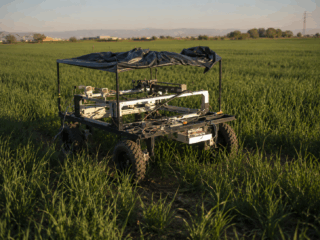
The flagship product is ULTRON, an autonomous robotic weed-control machine that combines artificial intelligence, machine vision, and laser technology. The platform identifies weeds in real time and eliminates them using targeted laser pulses without the need for herbicides.
The machine is designed to:
- identify weeds
- distinguish crops from weeds
- target weed growth centres
- destroy unwanted plants
- operate without chemical inputs
The system aims to replace both herbicides and labour-intensive manual weeding operations.
AI Crop & Weed Recognition
At the heart of the Luxeed platform is a proprietary machine-vision system.
The technology performs:
- crop recognition
- weed classification
- plant differentiation
- target selection
- laser positioning
Unlike conventional spraying systems, the Luxeed platform evaluates individual plants rather than treating entire field areas.
Laser Weed Elimination Technology
The company’s most distinctive technological component is its laser treatment system.
The approach provides:
- chemical-free weed control
- no soil disturbance
- no herbicide residues
- precision targeting
- compatibility with organic farming systems
The lasers are designed to destroy weed growth points while avoiding damage to surrounding crops.
Multi-Format Robot Architecture
One notable aspect of Luxeed’s strategy is the development of multiple machine sizes.
The company has indicated plans for platforms ranging from:
- approximately 75 cm working widths
- compact 1.5 metre systems
- larger 6 metre commercial units
This approach aims to make laser weeding accessible to a wider range of farm sizes rather than focusing exclusively on large-scale operations.
Product Scope Clarification
Luxeed does not manufacture:
- tractors
- seed drills
- sprayers
- cultivators
- combines
- harvesting equipment
Its products are autonomous weed-control technologies and AI-based robotic systems rather than traditional agricultural machinery.
Technology & Engineering / Digital Approach
Luxeed’s engineering philosophy combines:
artificial intelligence + machine vision + laser technology + autonomous farming
The company’s central technological thesis is that weeds should be managed individually rather than through blanket chemical treatment. This shifts the value proposition from input application to plant-level decision making.
Key technological components include:
- AI-based image recognition
- machine vision
- autonomous navigation
- laser targeting systems
- real-time decision algorithms
- crop identification software
A major differentiator is that Luxeed develops much of its AI and targeting software internally. According to the company, the entire workflow from image recognition to laser firing is software-controlled and optimized for agricultural environments.
The platform is particularly aligned with:
- organic agriculture
- regenerative farming
- pesticide reduction initiatives
- autonomous farming systems
Positioning:
AI-powered laser weed-control platform
Manufacturing & Industrial Footprint
Luxeed currently operates with a startup-scale industrial footprint centred around product development and prototype construction in the Netherlands. The company’s activities are concentrated in Venlo, an important agri-food and horticultural innovation cluster.
Its activities include:
- robotics engineering
- prototype assembly
- software development
- AI model training
- field testing
- validation trials
Unlike traditional agricultural machinery manufacturers, Luxeed’s scalability depends more on software, AI, and robotics deployment than on large-scale fabrication infrastructure.
The company remains in a pre-mass-production phase focused on technology validation and commercialisation.
Markets & Distribution / Customer Base
Customer Segments
Luxeed primarily targets:
- vegetable growers
- organic farmers
- specialty crop producers
- horticultural operations
- regenerative farming systems
- growers facing labour shortages
Its solutions are particularly attractive where:
- herbicide use is restricted
- labour costs are high
- manual weeding is expensive
- precision intervention is valuable
Geographic Presence
The company is currently focused on European agriculture, particularly markets facing increasing regulatory pressure around pesticide use.
Target regions include:
- Netherlands
- Belgium
- Germany
- France
- Southern Europe
The broader expansion logic follows regions where sustainability targets, labour shortages, and herbicide restrictions are accelerating demand for alternative weed-control technologies.
Although still early-stage, the company has gained international visibility through agricultural robotics events and global ag-tech networks.
Strengths & Competitive Advantages
Key strengths include:
- proprietary AI and laser integration
- chemical-free weed control
- strong alignment with sustainability trends
- compatibility with organic farming
- scalable machine architecture
- high-precision targeting
- startup agility
A particularly important advantage is the combination of artificial intelligence and laser treatment, allowing the company to eliminate weeds without herbicides and without disturbing the soil.
The company is also strongly aligned with long-term policy trends aimed at reducing pesticide use across European agriculture.
Weaknesses / Constraints
Structural limitations include:
- early-stage commercialisation
- limited manufacturing scale
- small installed base
- dependence on technology validation
- capital-intensive hardware development
Compared with established agricultural machinery companies, Luxeed lacks:
- dealer networks
- global service infrastructure
- large-scale manufacturing capacity
- broad product diversification
The company must also prove long-term reliability and economic viability under real-world farming conditions before large-scale adoption can occur.
Outlook & Opportunities
Luxeed is positioned around several major agricultural trends:
- pesticide reduction
- herbicide resistance management
- autonomous farming
- AI adoption
- regenerative agriculture
- organic production growth
Key opportunities include:
- expansion of laser-weeding adoption
- integration with autonomous vehicle platforms
- robotic-as-a-service (RaaS) business models
- specialty crop automation
- broader crop compatibility
- global regulatory support for reduced pesticide use
The company is particularly well positioned if weed management transitions from chemical-based solutions toward plant-specific robotic interventions.
Summary Table
| Category | Highlights |
|---|---|
| Name | Luxeed Robotics BV |
| Headquarters | Venlo, Netherlands |
| Core Business | AI-powered laser weed-control systems |
| Product Range | ULTRON autonomous laser weeding platform |
| Technology Focus | AI, machine vision, robotics, laser targeting |
| Strengths | Chemical-free weeding, precision targeting, sustainability alignment |
| Weaknesses | Startup scale, limited commercial deployment |
| Primary Markets | Europe, specialty crops, organic farming |
| Positioning | Autonomous laser weed-control specialist |
Bottom Line
Luxeed Robotics represents one of the most focused examples of the emerging laser-weeding sector, a category that sits at the intersection of artificial intelligence, robotics, and sustainable agriculture.
Unlike traditional agricultural machinery companies that seek incremental improvements in spraying or cultivation, Luxeed is attempting to eliminate the need for herbicides altogether by replacing chemical treatment with autonomous plant-by-plant intervention. If regulatory pressure on pesticides continues to increase and laser technologies become economically scalable, companies such as Luxeed could become important players in the future weed-management ecosystem. The company remains early-stage, but it operates in one of the most strategically significant segments of agricultural robotics.