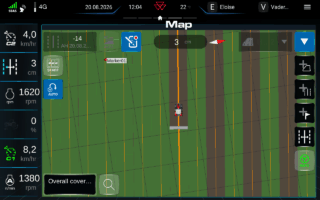


John Deere has announced a R$75 million (approximately US$15 million) investment to establish a new precision agriculture electronics assembly operation at its Canoas (Rio Grande do Sul) facility, with production scheduled to begin in July 2027. The new line will manufacture StarFire GPS receivers, intelligent electronic control modules, displays and navigation systems for agricultural and construction equipment destined for the Brazilian market. The investment expands Deere’s manufacturing footprint beyond traditional machinery by bringing high-value electronic systems closer to one of the world’s fastest-growing precision agriculture markets.
The announcement fits into John Deere’s broader strategy of transforming Brazil from a regional manufacturing base into a centre for tropical agriculture innovation. Over the past few years, the company has invested heavily in local engineering, including its Technology Development Center in Indaiatuba, while accelerating machine connectivity and precision farming adoption across the country. By producing critical electronic components locally, Deere expects to shorten supply chains, improve responsiveness to customer requirements and strengthen integration between locally developed digital technologies and domestically manufactured equipment.
Bottom Line: This is not simply a localisation project. It signals the regionalisation of precision agriculture manufacturing, with Brazil evolving from an equipment assembly location into a producer of the digital technologies that increasingly define modern farm machinery. As precision farming hardware becomes strategically as important as engines and transmissions, manufacturers are reshaping their industrial footprints to position electronics production closer to major growth markets. John Deere’s investment demonstrates that future competitive advantage will depend not only on where machines are built, but also on where their intelligence is developed and manufactured.