

Overview & History
Sami Robotics is a Canadian agricultural robotics company developing AI-powered autonomous machinery for selective vegetable harvesting and other labour-intensive field operations. Based in Varennes, Québec, the company is focused initially on broccoli harvesting but is developing its technology as a broader multifunctional field robotics platform.
The origins of the project date to 2018, when engineer and co-founder Éric Lapalme observed workers manually harvesting broccoli on his family farm and began exploring how machine vision, artificial intelligence and robotic arms could replicate the harvesting process. Early development resulted in the SAMI 4.0 robotic harvesting concept.
The current company was established as SAMI Agtech in 2023 and has subsequently evolved its market identity toward SAMI Robotics. The leadership team includes Pascal Labrecque, CEO and Co-Founder, and Éric Lapalme, CPO and Co-Founder.
A major milestone came during the 2025 season, when SAMI harvested broccoli that was commercially sold in Québec, moving the technology beyond laboratory development. In 2026, the company accelerated testing in California after being selected for the first Western Growers Center for Innovation & Technology-sponsored residency at Reservoir Farms in Salinas.
Corporate Structure / Ownership
SAMI Robotics is a privately held Canadian AgTech company.
The company remains relatively small, with public information indicating approximately 11–50 employees, but combines expertise in:
- agricultural robotics
- artificial intelligence
- machine vision
- mechanical engineering
- robotic manipulation
- autonomous navigation
- agricultural data analytics
Its headquarters and development activities are centred in Varennes, Québec, while California has become increasingly important for commercial field validation.
Core Business & Product Portfolio
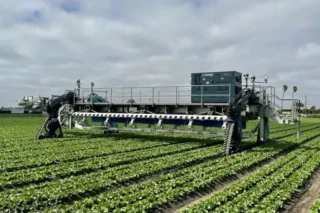
SAMI’s core technology is a multifunctional robotic field platform designed initially for selective harvesting.
Broccoli Harvesting
Broccoli is the first commercially available application.
The machine uses:
- artificial intelligence
- computer vision
- robotic arms
- crop maturity detection
- precision cutting mechanisms
- artificial lighting
- automated crop handling
Each robotic arm identifies a mature broccoli head, cuts it and collects it in under three seconds.
Machines can be configured with approximately 12 to 18 robotic arms operating simultaneously, allowing capacity to be adapted to different farms and bed configurations.
Unlike conventional mechanical harvesters that harvest the entire crop simultaneously, SAMI performs selective harvesting, collecting only vegetables identified as ready.
Multi-Crop Harvesting
Broccoli is intended as the entry point rather than the final market.
SAMI identifies additional harvesting applications including:
- romaine lettuce – coming soon
- iceberg lettuce – in development
- cauliflower – in development
- artichokes – in development
The underlying strategy is to reuse the same robotic platform while changing software, perception models and crop-specific tools.
Field Operations
SAMI is also developing applications beyond harvesting, including:
- mechanical/precision weeding
- thinning
- fertilisation
- pest control
These capabilities remain under development.
Product Scope Clarification
SAMI Robotics develops:
- autonomous harvesting machinery
- robotic harvesting arms
- machine-vision systems
- AI crop-recognition technology
- autonomous field platforms
- agricultural data analytics
- crop forecasting capabilities
- future weeding, thinning and precision application systems
SAMI does NOT currently manufacture:
- tractors
- combines
- conventional vegetable harvesters
- sprayers
- seed drills
- balers
- telehandlers
- engines
Its industrial focus is AI-powered multifunctional field robotics for specialty crops.
Technology & Engineering / Digital Approach
SAMI’s technological architecture combines:
Machine vision • AI • Robotics • Autonomy • Data analytics
Machine vision identifies individual vegetables and evaluates whether each plant has reached harvest maturity. Robotic arms then selectively cut and collect only suitable produce.
Artificial lighting enables the machine to operate during both daytime and nighttime, potentially extending harvesting windows beyond those available to conventional labour crews.
The platform also collects agronomic information while moving through the crop. SAMI states that the system can analyse field conditions during harvesting and help forecast which vegetables will become harvestable during the following days.
This data capability is strategically important because it potentially transforms the machine from a harvesting robot into a continuous crop-intelligence platform.
SAMI’s selective robotic harvesting technology is patented in Canada, the United States and Europe, while additional patent applications cover aspects of the mobile platform and field tools.
Manufacturing & Industrial Footprint
SAMI’s principal engineering base is located in Varennes, Québec, Canada.
The company remains at the industrialisation and commercial-scale validation stage rather than operating as a conventional high-volume machinery manufacturer.
Canada remains the core R&D location, while California is becoming the principal field-development environment. In July 2026, Western Growers selected SAMI for its first sponsored residency at Reservoir Farms in Salinas. The programme provides commercial vegetable acreage, shared R&D facilities, machinery and direct feedback from growers.
This is strategically important because California represents one of the world’s largest concentrated markets for high-value vegetable production and agricultural labour-intensive harvesting.
Markets & Distribution / Customer Base
SAMI primarily targets large-scale producers of:
- broccoli
- lettuce
- cauliflower
- artichokes
- other specialty vegetables
Initial development has been concentrated in Canada and the United States.
The company currently offers field demonstrations in California, indicating that the US specialty-crop industry is becoming its primary commercialisation target.
Australia could represent another future market. SAMI participated in a 2025 Australian vegetable-industry programme involving visits and discussions with broccoli and lettuce growers in Victoria and Queensland.
Strengths & Competitive Advantages
- Strong focus on labour-intensive specialty crops
- Selective rather than indiscriminate harvesting
- Less than three seconds harvesting cycle per robotic arm
- 12–18 arms operating simultaneously
- Multi-crop platform architecture
- Day and night operation
- Integrated field-data collection
- Crop maturity forecasting potential
- Patented harvesting technology
- Commercial broccoli harvest achieved in 2025
- Active California field validation
Weaknesses / Constraints
- Early commercialisation stage
- Limited installed base
- High technical complexity
- Vegetable harvesting presents major variability challenges
- Economics versus manual labour still require validation at scale
- Limited current crop portfolio
- Small organisation compared with established machinery OEMs
- Service infrastructure still developing
Reliability, throughput and economics under real commercial conditions will ultimately determine whether SAMI can move from successful field demonstrations to large-scale adoption.
Outlook & Opportunities
SAMI addresses one of the strongest structural pressures facing specialty-crop agriculture: labour availability.
Harvesting crops such as broccoli and lettuce remains highly dependent on manual workers because maturity can vary significantly between individual plants. Selective harvesting is therefore substantially more difficult to mechanise than harvesting cereals or other crops collected simultaneously.
SAMI’s principal opportunities include:
- commercial-scale broccoli harvesting
- lettuce harvesting
- cauliflower and artichoke harvesting
- autonomous weeding
- automated thinning
- precision fertilisation
- pest-control applications
- crop inventory mapping
- yield forecasting
- expansion into California and other major vegetable regions
The crucial strategic element is platform reuse. If the same machine can perform several operations during the crop cycle, utilisation increases substantially and the economics of agricultural robotics become more attractive.
Summary Table
| Category | Highlights |
|---|---|
| Company | SAMI Robotics / SAMI Agtech |
| Founded | 2023 |
| Headquarters | Varennes, Québec, Canada |
| Key Executives | Pascal Labrecque, Éric Lapalme |
| Core Business | Agricultural robotics |
| First Commercial Application | Selective broccoli harvesting |
| Platform | Multifunctional field robot |
| Configuration | 12–18 robotic arms |
| Harvesting Speed | Under 3 seconds per arm/head |
| Technology | AI, machine vision, robotics, data analytics |
| Future Crops | Lettuce, cauliflower, artichokes |
| Future Applications | Weeding, thinning, fertilisation, pest control |
| Primary Markets | Canada / United States |
| Competitive Position | Emerging specialty-crop robotics company |
Bottom Line
SAMI Robotics is one of the more interesting emerging companies in specialty-crop automation because its ambition extends significantly beyond building a broccoli harvester.
The strategic concept is a multi-crop, multi-task robotic platform. Broccoli provides the first commercial application, but lettuce, cauliflower and artichokes are already part of the development roadmap, while weeding, thinning, fertilisation and pest control could eventually increase machine utilisation across the entire crop cycle.
The company has also crossed an important threshold: broccoli harvested by SAMI was commercially sold during the 2025 Québec season, while the 2026 California programme moves development into one of the world’s most demanding commercial vegetable-production environments.
The key question is now scalability rather than technical concept: whether SAMI can deliver sufficient reliability, throughput and economics to replace scarce harvesting labour at commercial scale.