

Overview & History
YTO Group Corporation, also known as the First Tractor Company, is one of the largest agricultural machinery manufacturers in China. Founded in 1955, it produced the country’s first domestically made tractor and has since become a symbol of China’s modernization in agriculture. YTO is part of the state-owned China National Machinery Industry Corporation (Sinomach), a massive industrial group that also operates in construction equipment, heavy machinery, and automotive components.
Over the decades, YTO expanded its product portfolio from basic wheeled tractors into tracked tractors, combines, construction machinery, and power systems. The brand has positioned itself as a pillar of Chinese mechanization and as one of the government’s preferred champions for international expansion.
Group & Synergies
Being part of Sinomach, YTO benefits from access to significant financial resources, global trade networks, and shared R&D capacity. This group integration allows YTO to compete not only in China but also in global tenders, especially in developing regions supported by Chinese foreign policy initiatives such as the Belt and Road Initiative.
YTO also has synergies with domestic research institutions and universities, helping it modernize engine production, improve emissions compliance, and expand into digital farming technologies.
Product Portfolio
YTO offers a wide portfolio of agricultural and industrial machinery:
- Tractors: ranging from 25 HP compact machines to 260+ HP large-scale row-crop tractors. Includes wheeled and tracked models.
- Combine Harvesters: mid-range combines adapted to rice, wheat, and corn cultivation.
- Construction Equipment: bulldozers, road rollers, loaders.
- Engines and Components: in-house production of diesel engines, transmissions, axles, and hydraulics.
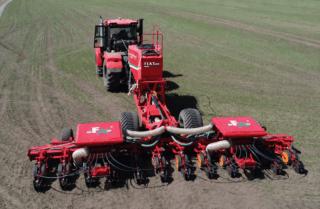
- Implements & Attachments: YTO-branded plows, seeders, and sprayers, although not as sophisticated as Western counterparts.
Markets & Distribution
Domestically, YTO is one of the most recognized brands in China, particularly in the northern and central provinces where large-scale wheat and corn farming dominates. It plays a key role in state-driven mechanization programs.
Internationally, YTO exports to over 100 countries. Its main export regions include:
- Asia: Southeast Asia, South Asia, and Central Asia.
- Africa: major recipient of Chinese concessional loans tied to equipment purchases.
- Eastern Europe & CIS: tractors adapted for Russian and Central Asian conditions.
- Latin America: growing but smaller presence compared to India’s Mahindra or Sonalika.
Distribution is primarily handled through importer–distributor partnerships, often tied to government programs or aid packages.
Dealer Network & Positioning
YTO’s dealership network is less uniform than Western OEMs. In China, it is integrated with local cooperatives and government-supported agencies. Abroad, it relies heavily on distributors, with aftersales support being a known weakness.
The brand positions itself as affordable, rugged, and accessible, with products that meet the needs of cost-sensitive farmers in developing regions. However, it struggles to compete directly with John Deere, AGCO, or CNH in advanced markets due to lower technology integration and weaker dealer support.
Precision Agriculture & Alternative Fuels
- Precision Agriculture: YTO has limited offerings compared to Western OEMs. Partnerships with Chinese tech firms are being developed to introduce GPS guidance, yield mapping, and basic telematics, but integration is still early-stage.
- Alternative Fuels: The company has showcased prototypes of battery-electric compact tractors and hydrogen-powered tractors at Chinese trade fairs, signaling government-backed exploration of low-emission solutions. These remain pilot projects with no large-scale commercialization yet.
Future Outlook
YTO’s future is closely tied to China’s agricultural policy and global trade ambitions. Its strengths lie in affordability, vertical integration, and state support, which give it a strong competitive position in developing markets. However, challenges include:
- Limited precision agriculture ecosystem compared to global leaders.
- Aftermarket and service gaps in international markets.
- Dependence on subsidies and state financing for exports.
Opportunities for YTO include leveraging its cost advantage to capture share in Africa, Asia, and parts of Eastern Europe, while gradually upgrading technology to appeal to more advanced markets. Its exploration of electric and hydrogen tractors could also position it as a low-cost alternative in the coming decade if commercialization accelerates.
Summary Table
| Aspect | Description |
|---|---|
| History | Founded 1955, China’s first tractor maker, part of Sinomach |
| Group & Synergies | Backed by state-owned Sinomach, strong financial and R&D resources |
| Product Portfolio | Tractors, combines, engines, construction machinery, implements |
| Markets | Strong in China; exports to Asia, Africa, CIS, and Latin America |
| Dealership Model | Local cooperatives in China; distributors abroad, weaker aftersales |
| Precision/Alt Fuels | Early-stage GPS & telematics; pilots in electric and hydrogen tractors |
| Outlook | Growth in developing regions; needs stronger service and digital platforms |