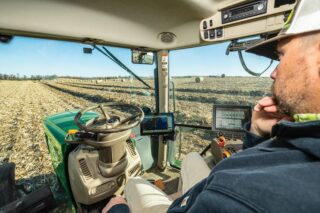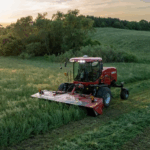


Case IH has launched the new WD6 Series self-propelled windrower, combining higher field capacity with what the company describes as the industry’s first Relative Yield Mapping technology for windrowers. The system allows operators to visualise relative variations in forage yield across the field while cutting, with the resulting information transferred to Case IH FieldOps for analysis and year-over-year comparison. Through Case IH’s Connectivity Included programme, qualifying WD6 machines can access FieldOps and yield-related data without annual subscription fees, extending precision-data capabilities into a hay and forage operation where detailed spatial information has traditionally been less accessible than in grain harvesting.
The WD6 also introduces significant mechanical and productivity improvements. Case IH cites operating speeds of up to 20 mph in the field and 30 mph during transport, increased horsepower and the widest disc header available in the range, targeting greater acreage during narrow forage-harvesting windows. A new active hydraulic flotation system automatically maintains pressure to provide more consistent ground pressure as terrain changes, helping protect cut quality while reducing the need for continuous operator adjustment.
Bottom Line: The WD6 is particularly interesting because Case IH is bringing the data-driven logic already established in combines into forage harvesting. Relative yield mapping turns mowing from an operation that primarily produces a physical result into another source of spatial agronomic information. For livestock and forage operations, identifying recurring differences in field productivity could eventually support better decisions around fertility, stand management and field performance. Combined with subscription-free connectivity, Case IH is effectively broadening precision agriculture beyond grain production and making the windrower another data-generating machine within the FieldOps ecosystem.