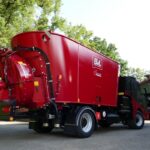


1. Overview & History
RABAUD is a French family-owned agricultural and industrial machinery manufacturer headquartered in Sainte-Cécile, Vendée, specialising in agricultural implements, forestry equipment, vineyard machinery, professional landscaping tools and construction-related attachments.
Founded in 1980 by Claude Rabaud, the company originated from practical agricultural engineering rather than conventional industrial machinery manufacturing.
Claude Rabaud was originally a farmer who developed mechanical solutions to reduce the physical effort required by agricultural operations. His early inventions included a silage-handling machine developed in 1974, followed by equipment for processing firewood.
Growing demand for these machines led to the establishment of RABAUD as a manufacturing business in 1980.
Over the following decades, the company progressively diversified from agricultural and forestry equipment into a broad range of professional machinery.
Its development has been characterised by three distinctive principles: practical mechanical innovation, manufacturing integration and diversification across related equipment markets.
Today, RABAUD occupies an established position among French specialist machinery manufacturers, with a portfolio serving agriculture, forestry, viticulture, landscaping, construction and municipal maintenance.
Unlike full-line agricultural machinery OEMs, RABAUD does not manufacture tractors or combine harvesters. Its competitive position is based on specialised implements and attachments designed to extend the operational capabilities of existing machines.
2. Corporate Structure & Ownership
RABAUD is an independent, family-owned French manufacturing company.
The business was founded by Claude Rabaud and is now managed by his sons, Éric and Jérôme Rabaud, maintaining continuity between the founding family’s engineering philosophy and its current industrial development.
Its principal manufacturing and corporate operations are concentrated at Sainte-Cécile in western France.
The company reports the following industrial indicators:
| Indicator | Company-reported figure |
|---|---|
| Founded | 1980 |
| Employees | Approximately 220 |
| Annual turnover | €38.5 million |
| Annual machinery production | Approximately 8,000 units |
| Industrial site | 15 hectares |
| Covered manufacturing buildings | 22,100 m² |
| Industrial investment | Approximately €20 million |
| Patents filed historically | More than 50 |
| Distribution network | Approximately 2,000 distributors |
| Spare-parts references | More than 12,000 |
These figures describe the company’s published operating profile; they should not be interpreted as audited results for a specific financial year unless explicitly identified as such.
The scale of RABAUD’s manufacturing operations places it above many small specialist implement manufacturers, while remaining substantially smaller than the major multinational agricultural equipment groups.
3. Core Business & Product Portfolio
RABAUD operates across several machinery markets with overlapping engineering requirements.
| Business segment | Main equipment | Principal customers |
|---|---|---|
| Agriculture | Post drivers, augers, mixers, drainage tools, livestock equipment | Farmers and contractors |
| Forestry | Log splitters, wood processors, chippers, stump grinders | Forestry contractors and firewood businesses |
| Viticulture & orchards | Vineyard maintenance, pruning, post installation | Winegrowers and orchard operators |
| Landscaping | Mulchers, sweepers, weed brushes, vegetation equipment | Contractors and municipalities |
| Construction & industry | Mixing buckets, ground-treatment tools, attachments | Construction and industrial operators |
| Municipal maintenance | Sweepers, snow blades, cleaning equipment | Public authorities and service contractors |
RABAUD’s catalogue contains numerous machine families and configurations.
The company manufactures equipment suitable for tractors, compact tractors, excavators, telehandlers, wheel loaders, skid-steer loaders and other carriers.
This compatibility is central to its industrial model.
Rather than developing complete vehicles, RABAUD concentrates on specialised equipment that allows existing carrier machines to perform additional operations.
4. Agricultural Equipment – Farm Infrastructure & Maintenance
RABAUD’s agricultural portfolio is particularly strong in farm infrastructure, fencing, land maintenance and specialised field operations.
Its principal equipment categories include:
- hydraulic post drivers;
- post pointers and post splitters;
- agricultural augers;
- barbed-wire and fencing-wire dispensers;
- livestock feeding and mixing equipment;
- livestock-building cleaning equipment;
- drainage subsoilers;
- grading blades;
- agricultural sweepers;
- compost-processing equipment;
- vertical-axis concrete mixers.
These products serve operations that are important to farm productivity but are often outside the principal equipment categories of major tractor manufacturers.
Fencing equipment is particularly relevant to livestock production, vineyards and permanent-crop systems.
Drainage and land-maintenance equipment addresses soil-management and infrastructure requirements.
Livestock-related products extend RABAUD’s agricultural presence beyond field cultivation.
The company’s agricultural business is therefore best understood as specialised farm mechanisation and infrastructure equipment, rather than conventional crop-production machinery.
5. TURBOFRAP – Hydraulic Post-Driving Technology
One of RABAUD’s best-known agricultural equipment families is TURBOFRAP, a range of hydraulic post drivers.
These machines are designed for installing wooden, metal or other suitable posts used in agricultural fencing, vineyards, orchards and infrastructure projects.
Post installation is a labour-intensive operation, particularly when large numbers of posts must be placed accurately across uneven terrain.
Hydraulic post drivers mechanise this process by applying repeated impacts to drive posts into the ground.
RABAUD offers different mounting configurations depending on the carrier and operating environment.
TURBOFRAP – Principal applications
| Application | Operational requirement |
|---|---|
| Livestock fencing | Installation of boundary and paddock posts |
| Vineyards | Placement and maintenance of trellis posts |
| Orchards | Installation of support structures |
| Agricultural infrastructure | Construction of field barriers and enclosures |
| Landscaping | Installation of posts and structural supports |
| Construction | Selected ground-installation applications |
The range is particularly relevant to professional contractors performing repetitive installation operations.
Its competitive proposition is based on productivity, controlled hydraulic operation and compatibility with different carriers.
TURBOFRAP illustrates how RABAUD has developed specialist machinery around recurring agricultural infrastructure requirements.
6. Vineyard & Orchard Equipment
RABAUD has an established presence in vineyard and orchard mechanisation.
Its portfolio includes equipment for post installation, wire handling, pruning, soil maintenance and vegetation management.
These operations are particularly important in perennial crops, where support structures and vegetation must be maintained throughout the production cycle.
The company’s solutions include:
- hydraulic post drivers;
- fencing and wire dispensers;
- augers;
- hydraulic pruning discs;
- mulching and vegetation-management equipment;
- specialised attachments for narrow agricultural carriers.
The industrial logic is closely related to RABAUD’s broader attachment strategy.
Vineyard and orchard operators frequently use compact tractors, straddle tractors or specialised carriers. Equipment manufacturers capable of supplying compatible implements can serve multiple operational requirements without producing the base vehicle.
RABAUD’s presence in this segment is therefore based on implement engineering and mechanical versatility.
7. Forestry Machinery – A Major Industrial Specialisation
Forestry and wood processing represent one of RABAUD’s most extensive product areas.
The company manufactures machinery for cutting, splitting, processing, transporting and handling timber.
Its portfolio includes:
| Product family | Main application |
|---|---|
| Log splitters | Firewood preparation |
| Wood processors | Integrated cutting and splitting |
| Circular saw benches | Timber and firewood cutting |
| Wood chippers | Branch and wood-waste processing |
| Forestry mulchers | Vegetation and woody-material reduction |
| Stump grinders | Removal of tree stumps |
| Forestry trailers | Timber transport |
| Forestry cranes and grabs | Wood handling |
| Log bundlers | Firewood packaging |
| Log palletisers | Automated firewood handling |
| Post pointers and peelers | Preparation of wooden posts |
This broad portfolio allows RABAUD to serve both agricultural customers who process wood as a secondary activity and professional forestry businesses.
The forestry range is also important to the company’s revenue diversification.
Demand for forestry and wood-processing equipment follows different market drivers from conventional agricultural machinery, potentially reducing dependence on individual farming sectors.
8. XYLOCHIP & XYLOMIX – Wood Processing & Biomass
RABAUD markets specialised wood-processing equipment under product families including XYLOCHIP and XYLOMIX.
XYLOCHIP machines are designed for chipping branches and woody material.
XYLOMIX equipment addresses heavier shredding and biomass-processing applications.
The machines can serve forestry contractors, landscaping businesses, municipalities and agricultural enterprises.
Their applications include:
- processing pruning residues;
- reducing woody vegetation;
- preparing biomass;
- maintaining woodland and hedgerows;
- handling green waste;
- supporting composting operations.
The importance of these products extends beyond waste disposal.
Wood chips and shredded organic material can be used for mulching, composting, energy production and other applications, depending on material quality and local requirements.
RABAUD’s portfolio therefore participates in the broader market for biomass processing and circular material management.
However, the company should not be classified as a producer of industrial biomass power plants or large-scale energy-generation equipment.
Its expertise is concentrated in mechanical processing machinery.
9. Firewood Processing – From Splitting to Packaging
Firewood processing is historically central to RABAUD’s development.
The company offers machinery covering several stages of the firewood-production process.
These include:
- log cutting;
- hydraulic splitting;
- combined cutting and splitting;
- cleaning and screening;
- bundling;
- palletising;
- handling and transport.
Its product families include FARMER log splitters, XYLOSCIE circular saws and FAGOMATIC bundling equipment.
This range supports both individual professional users and businesses producing firewood commercially.
RABAUD’s ability to supply machinery for successive processing stages provides an advantage over manufacturers offering only a single type of log splitter.
It also creates opportunities for customers to expand from individual machines toward more integrated processing arrangements.
The company’s development of handling and palletising equipment indicates an interest in improving productivity beyond the cutting and splitting stages.
10. Landscaping & Municipal Maintenance
RABAUD has diversified into professional landscaping and municipal equipment.
Its products include:
- mechanical sweepers;
- leaf vacuums;
- weed brushes;
- thermal weed-control equipment;
- forestry mulchers;
- hedge trimmers;
- stump grinders;
- snow-clearing blades;
- pressure washers;
- road and surface-cleaning attachments.
Product families such as TURBONET, SUPERNET and SUPERCHAMPION serve professional sweeping and surface-maintenance applications.
These machines can be mounted on different carriers, including tractors, compact loaders and utility vehicles.
The segment is commercially significant because it allows RABAUD to address customers outside agriculture while using many of the same manufacturing and engineering capabilities.
Municipalities, landscaping contractors and public-service operators require durable equipment capable of intensive use and straightforward maintenance.
RABAUD’s established experience in hydraulic attachments and mechanical fabrication provides a foundation for these markets.
11. Construction, Industry & Ground-Treatment Equipment
RABAUD also manufactures equipment for construction, infrastructure maintenance and ground treatment.
Its portfolio includes concrete mixers, mixing buckets, road-binder spreaders, grading blades, material-handling attachments and specialised railway equipment.
A particularly distinctive activity is the development of self-propelled ground-treatment machinery, including the AKERA range.
These machines are designed for soil stabilisation and the controlled application of binders such as lime and cement in construction operations.
The segment illustrates that RABAUD’s capabilities extend beyond tractor-mounted agricultural implements.
However, the AKERA machines should be classified as specialised construction and soil-treatment equipment, not agricultural tractors or self-propelled crop machines.
12. Manufacturing & Industrial Integration
RABAUD’s principal manufacturing facility is located in Sainte-Cécile, Vendée, France.
The company reports a 15-hectare industrial site incorporating approximately 22,100 m² of covered manufacturing buildings.
Its production process includes internal engineering, metal cutting, machining, welding, painting, assembly and final equipment preparation.
This degree of integration is an important competitive characteristic.
| Industrial capability | Strategic contribution |
|---|---|
| Internal engineering | Proprietary product development |
| Laser and sheet-metal cutting | Component flexibility |
| CNC machining | Precision mechanical production |
| Welding | Structural manufacturing |
| Automated bending | Productivity and repeatability |
| Water-based painting | Environmental and process improvements |
| Assembly | Product configuration and quality control |
| Internal logistics | Delivery coordination and customer support |
RABAUD has invested approximately €20 million in industrial improvements, including modern bending equipment, automation and painting technologies.
The company has also benefited from France’s industrial investment-support initiatives.
Its reported annual production of approximately 8,000 machines demonstrates meaningful manufacturing scale within the specialist equipment segment.
The ability to manufacture many different products using common industrial processes is central to the company’s economic model.
13. Research, Development & Innovation
Innovation has been a defining feature of RABAUD since its establishment.
The company reports more than 50 patents filed historically and an internal research and development team of approximately ten specialists.
Its product-development approach is strongly influenced by feedback from farmers, contractors and professional machinery users.
RABAUD reports introducing approximately five to ten new or significantly improved products annually.
This innovation model differs from the technology strategies of large agricultural OEMs.
Rather than concentrating primarily on advanced electronics, autonomy or digital platforms, RABAUD focuses heavily on mechanical functionality, hydraulic systems, operating productivity and machine versatility.
Its competitive strength lies in developing practical solutions to specific operating problems.
The breadth of its portfolio also allows engineering developments in one sector to support applications in another.
14. Recent Product Development
RABAUD continues to expand its product portfolio across forestry, landscaping and professional equipment.
Among the products highlighted in its current catalogue are:
| Product | Main application |
|---|---|
| ERKULE | Tracked multifunctional tool carrier |
| R-CUT | Hydraulic pruning disc |
| FRONTNET | Front-mounted sweeping and windrowing |
| XYLOG 411 | Integrated firewood processing |
| Wheeled stump grinder | Professional stump removal |
These developments illustrate several directions in the company’s product strategy.
The ERKULE reflects interest in dedicated carrier platforms, complementing RABAUD’s traditional reliance on attachments for third-party vehicles.
R-CUT reinforces its position in vegetation and pruning operations.
FRONTNET extends its professional surface-maintenance range, while XYLOG 411 strengthens its established firewood-processing portfolio.
The common characteristic is continued diversification through specialised machinery rather than expansion into conventional full-line agricultural equipment.
15. Distribution, Markets & After-Sales Service
RABAUD operates an extensive commercial distribution network.
The company reports approximately 2,000 distributors in France, with additional international representation.
Its equipment is marketed in European and other international markets through local distribution partners.
The company also maintains its own delivery fleet, with drivers supporting machine delivery, commissioning and customer demonstrations.
This approach is important for specialist equipment.
Customers frequently require practical guidance on machine compatibility, hydraulic requirements, operating procedures and maintenance.
RABAUD also reports maintaining more than 12,000 spare-parts references, with original parts availability supported over extended periods.
After-sales service therefore forms an important part of its competitive proposition.
Its customer base includes agricultural businesses, forestry operators, machinery contractors, municipalities, landscaping companies and construction firms.
This diversity reduces reliance on a single end market, although it also increases the complexity of managing the product portfolio and distribution network.
16. Product Scope Clarification
RABAUD manufactures:
- agricultural fencing and post-installation equipment;
- vineyard and orchard maintenance implements;
- forestry machinery;
- log splitters and firewood processors;
- wood chippers and mulchers;
- stump grinders;
- agricultural and municipal sweepers;
- specialised livestock and farm-maintenance equipment;
- drainage and land-maintenance tools;
- construction and ground-treatment equipment;
- specialised tool carriers and attachments.
RABAUD does not manufacture as a core product category:
- conventional agricultural tractors;
- combine harvesters;
- self-propelled forage harvesters;
- conventional grain seed drills;
- large self-propelled crop sprayers;
- agricultural engines;
- complete telehandlers.
The company does manufacture certain dedicated self-propelled or tracked specialised machines, but these should not be confused with conventional agricultural tractors.
Its industrial identity is diversified specialist machinery manufacturing with a strong attachment and implement engineering base.
17. Strengths & Competitive Advantages
RABAUD’s principal strengths are associated with industrial integration, engineering flexibility and market diversification.
These include:
- Independent family ownership and management continuity.
- More than four decades of manufacturing experience.
- Substantial internal production capabilities.
- Broad expertise in hydraulic and mechanical equipment.
- More than 50 patents filed historically.
- A large and diversified product catalogue.
- Established French dealer coverage.
- Approximately 8,000 machines produced annually.
- Extensive spare-parts infrastructure.
- Compatibility with numerous carrier-machine categories.
- Commercial exposure to agriculture, forestry, construction and landscaping.
- Continued investment in production automation.
Its most distinctive advantage is the ability to apply a common industrial and engineering base across numerous specialised equipment categories.
18. Weaknesses & Constraints
RABAUD’s diversified product portfolio also creates challenges.
Manufacturing many different machine types and configurations increases production complexity, inventory requirements and technical-support demands.
The company competes with specialist manufacturers in several sectors rather than operating within one clearly defined market.
Additional constraints include:
- competition from lower-cost imported implements;
- exposure to steel, hydraulic-component and energy costs;
- relatively limited scale compared with multinational equipment groups;
- dependence on dealers for customer relationships;
- the need to maintain profitability across numerous product families;
- growing requirements for equipment safety and regulatory compliance;
- complexity of spare-parts management.
The principal strategic challenge is balancing product diversity with manufacturing efficiency.
RABAUD must maintain the flexibility that supports its competitive position without allowing complexity to undermine productivity and margins.
19. Outlook & Opportunities
RABAUD’s future development is likely to be influenced by several industrial trends.
Specialised mechanisation. Labour costs and operational requirements continue to support demand for machines addressing specific agricultural, forestry and maintenance tasks.
Multifunctional equipment. Customers increasingly seek attachments that improve the utilisation of existing tractors, loaders and excavators.
Biomass processing. Wood-waste management, firewood production and vegetation processing provide opportunities for specialist forestry equipment.
Infrastructure maintenance. Municipalities and contractors require machinery for vegetation control, cleaning and land maintenance.
Manufacturing efficiency. Continued automation can help offset European production costs and improve the economics of a highly diversified catalogue.
The company’s industrial position provides opportunities to benefit from several equipment markets without relying exclusively on conventional agricultural investment cycles.
Summary Table
| Category | Highlights |
|---|---|
| Company | RABAUD |
| Founded | 1980 |
| Founder | Claude Rabaud |
| Country | France |
| Headquarters | Sainte-Cécile, Vendée |
| Ownership | Family-owned |
| Management | Éric and Jérôme Rabaud |
| Employees | Approximately 220 |
| Reported Turnover | €38.5 million |
| Annual Production | Approximately 8,000 machines |
| Industrial Site | 15 hectares |
| Covered Manufacturing Area | 22,100 m² |
| Reported Industrial Investment | Approximately €20 million |
| Patents | More than 50 |
| French Distribution Network | Approximately 2,000 dealers |
| Spare-Parts References | More than 12,000 |
| Core Business | Specialist machinery and attachments |
| Agricultural Products | Post drivers, fencing, drainage, livestock and maintenance equipment |
| Forestry Products | Log splitters, wood processors, chippers and mulchers |
| Additional Markets | Viticulture, landscaping, construction and municipalities |
| Key Product Families | TURBOFRAP, XYLOCHIP, XYLOMIX, FARMER, XYLOG |
| Strategic Position | Diversified Specialist Implements, Forestry Machinery & Professional Equipment |
Bottom Line
RABAUD represents an established example of industrial diversification within the European specialist machinery industry.
Founded by a farmer seeking practical mechanical solutions, the company has evolved into a manufacturer employing approximately 220 people and producing around 8,000 machines annually.
Its industrial development has been built on three complementary capabilities: proprietary mechanical engineering, vertically integrated manufacturing and the ability to apply common technologies across different equipment markets.
Unlike full-line agricultural machinery manufacturers, RABAUD concentrates on specialised implements, attachments and machines serving operations that often fall outside the principal product portfolios of major OEMs.
Its presence in agriculture, forestry, viticulture, landscaping and construction provides a diversified commercial foundation.
The company’s extensive dealer network and spare-parts infrastructure further strengthen its position among professional equipment users.
Its long-term competitiveness will depend on maintaining manufacturing efficiency while continuing to develop practical machinery for increasingly specialised operating requirements.
Strategic Position
Industrial Layer: Diversified Specialist Implements, Forestry Machinery & Multi-Sector Mechanical Equipment
RABAUD occupies a distinctive position within the European machinery value chain:
Mechanical Engineering → Integrated Manufacturing → Specialised Implements → Multi-Sector Equipment Applications
Its industrial model demonstrates how a manufacturer can achieve meaningful scale without competing directly in the conventional tractor or combine-harvester markets.
The company creates value by developing machinery that extends the functionality of existing carrier vehicles and mechanises operations that may otherwise require substantial manual labour.
This approach provides access to several customer segments while allowing common manufacturing technologies to support a diversified product portfolio.
The strategy also reduces dependence on the investment cycles of individual agricultural equipment categories.
For major agricultural OEMs, companies such as RABAUD form part of the broader implement ecosystem that increases the usefulness and versatility of tractors, loaders and other carrier machines.
For customers, the value proposition is based on specialised functionality, equipment durability and the ability to perform additional operations using existing machinery.
RABAUD’s strategic significance lies in demonstrating that a highly diversified portfolio of specialised machines, supported by integrated manufacturing and extensive distribution, can provide a sustainable industrial position alongside much larger agricultural and construction equipment manufacturers.